
Incident clarity
Capture what happened, who was involved, when it occurred, and what changed afterward.
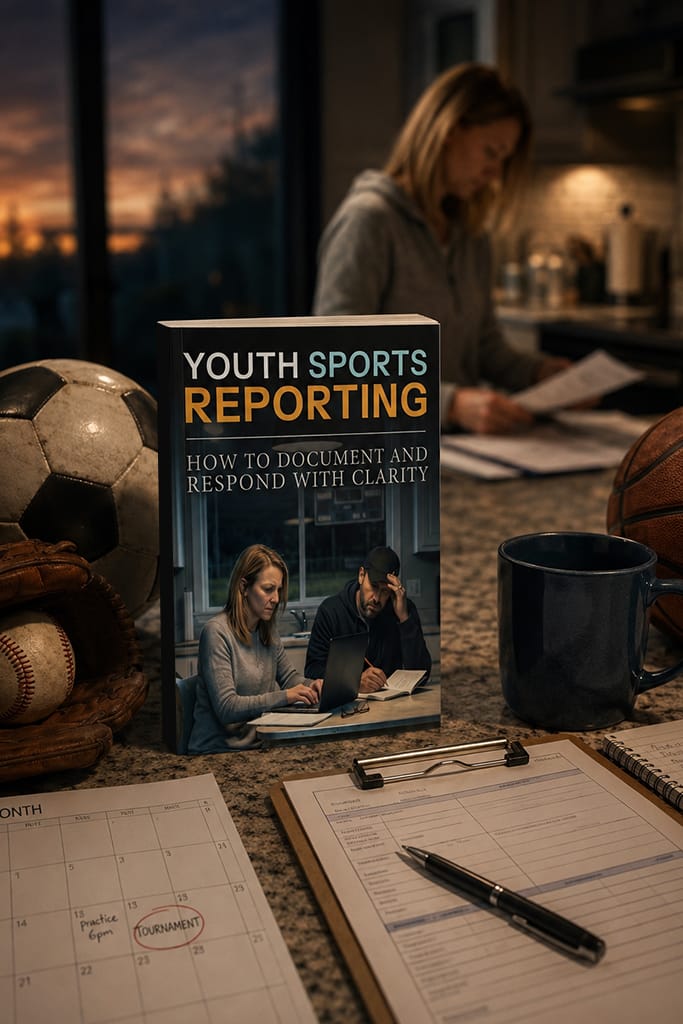
For parents who need to document a concern, prepare a message, or respond after something happened in youth sports. This toolkit helps you capture facts, reduce emotional fog, and communicate in a way that is serious, specific, and harder to dismiss.
Capture what happened, who was involved, when it occurred, and what changed afterward.
Write from facts and child impact instead of fear, anger, or accusation.
Decide whether to ask a question, request review, document, or pause.
Use calmer wording when the stakes feel personal.
Use this toolkit when something happened, something was said, a pattern may be forming, or you need to communicate with a coach, director, or organization.
You need to record the moment while details are still fresh.
Most common starting pointYou want to track repeated concerns without overclaiming.
You know you need to respond but do not trust your first draft.
You need structure before frustration becomes the message.
You want dates, incidents, responses, and impact in one place.
You need clarity, restraint, and documentation strength.
A clear record protects memory, reduces exaggeration, and helps parents respond with more discipline when the situation feels loaded.
The toolkit helps parents document concerns, prepare responses, and keep the child’s experience at the center.
Write what happened before memory and emotion reshape it.
Connect the concern to confidence, safety, belonging, or development.
Track screenshots, emails, schedules, witnesses, and prior responses.
Know whether to ask, document, request review, escalate, or wait.
Turn raw frustration into parent-ready wording.
Avoid overstatement while still making the concern clear.
This toolkit helps parents honor the seriousness of a concern without letting emotion become the thing others respond to.
Structured prompts and response frameworks for documenting youth sports concerns with clarity.
Capture the who, what, when, where, impact, and immediate response.
Track repeated moments and prior communication in order.
Know what supports the concern and what is still missing.
Prepare a professional email or follow-up note.
Find language that sounds too vague, emotional, or accusatory.
Decide whether the situation needs monitoring, discussion, review, or escalation.
This toolkit helps families put structure around hard moments so their concern is easier to understand and harder to dismiss.
You can care deeply and still communicate clearly. Build the record first, then choose the next step from steadier ground.
The goal is to preserve facts, not prove every conclusion. That restraint is what makes the record stronger.
For parents
For parents
For parents
Explore more
Clarity Library All productsBrowse all products, tools, books, courses, and resources in one place. The Parent SidelineInsights and guidance for parents in youth sports.Start here


