Rookie and captain paths
Choose simpler language for ages 7-9 or more mature reflection for ages 10-13.
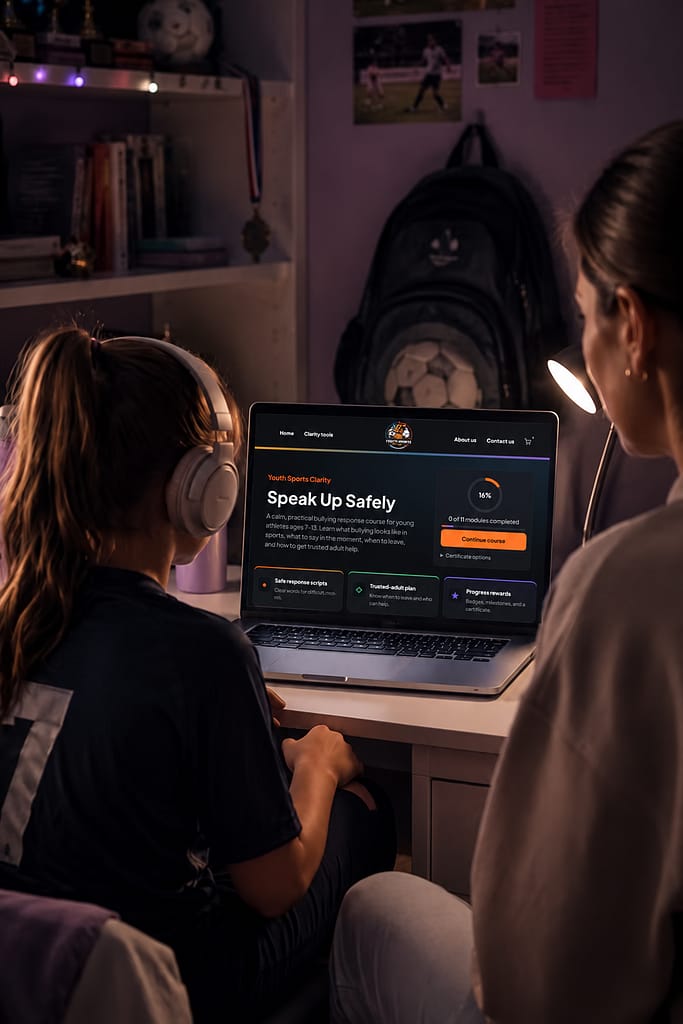
A calm, kid-friendly bullying response course for young athletes ages 7-13. Speak Up Safely teaches the difference between conflict, meanness, and bullying, then helps kids practice safe scripts, trusted adult help, digital safety, and a simple safety plan.
Choose simpler language for ages 7-9 or more mature reflection for ages 10-13.
Practice real team situations like repeated teasing, exclusion, rumors, screenshots, and pressure to stay silent.
Learn short words to use in the moment, when to walk away, and how to move toward adult support.
Track progress, earn lesson badges, and print or save a completion certificate when the course is done.
This course is built for kids who need help recognizing bullying patterns, responding safely, and knowing which adults to involve when a sports situation becomes too hurtful to handle alone.
Your child needs help knowing whether this is a one-time conflict or a hurtful pattern.
Most common starting pointThey need language for teasing, humiliation, or comments that are meant to control or embarrass.
They need to recognize exclusion and know who to stand near, sit with, or tell.
They need a safer plan for screenshots, rumors, team-chat targeting, and online pressure.
They need short scripts they can actually remember when nerves are high.
They need a trusted adult ladder so they are not stuck if the first person does not help enough.
Kids learn what bullying can look like in sports, what to say in the moment, when to leave, and how to get trusted adult help.
Each lesson turns a scary or confusing team situation into a simple skill: notice the pattern, use short words, move toward safety, and tell the right adult.
Learn the difference between conflict, meanness, and bullying so the next step makes sense.
Use short phrases like That is not funny to me or Do not talk about me like that.
Understand that walking away can be part of a safety plan, not a weakness.
Learn what to do when rumors, screenshots, or group chats start targeting someone.
Name several trusted adults and know what to say if the first adult does not listen.
Choose safe places, safe people, scripts, and facts to remember before a hard moment happens.
The course helps kids move from wondering if they are overreacting to understanding the pattern, naming what happened, and knowing who can help.
The course combines interactive lessons, scenario practice, quizzes, badges, progress tracking, a companion download, and a printable certificate so kids can learn at their own pace.
Rookie keeps language simple for ages 7-9. Captain adds older-athlete reflection for ages 10-13.
Move through bullying patterns, unsafe jokes, exclusion, digital safety, safe exits, and trusted adult help.
Kids practice realistic youth sports situations and choose safer responses.
Each module includes checks for understanding and badges like Pattern Spotter, Clear Words, and Safe Exit.
The course saves started and completed modules so athletes can return at their own pace.
Add the athlete name and print or save a completion award after finishing the course.
The lessons focus on the situations kids actually face on teams: repeated teasing, exclusion, group chats, rumors, unsafe jokes, pressure to stay quiet, and adults who may not understand the first time.
Help your athlete practice safe responses, know when to leave, and understand how to ask trusted adults for help without carrying the whole situation alone.
Speak Up Safely keeps the language simple, gives kids choices, and lets them practice with a parent or trusted adult before they need the words in real life.
For parents
For parents
For parents
Explore more
Clarity Library All productsBrowse all products, tools, books, courses, and resources in one place. The Parent SidelineInsights and guidance for parents in youth sports.Start here